what happens to your body when you sleep?
Sleep accounts for i-quarter to one-third of the man lifespan. Only what exactly happens when you lot sleep?
Earlier the 1950s, most people believed sleep was a passive activity during which the trunk and brain were fallow. "Merely it turns out that sleep is a catamenia during which the brain is engaged in a number of activities necessary to life—which are closely linked toquality of life," says Johns Hopkins slumber expert and neurologist Marker Wu, One thousand.D., Ph.D. Researchers like Wu are spending many of their waking hours trying to larn more about these processes and how they touch mental and physical wellness. Here is a glimpse into the powerful (frequently surprising) findings of sleep researchers—and what they're still trying to observe nearly the scientific discipline of sleep.
All Slumber Is Not the Aforementioned
Throughout your time asleep, your encephalon will bike repeatedly through two different types of sleep: REM (rapid-eye movement) sleep and non-REM sleep.
The first part of the cycle isnon-REM sleep, which is composed of four stages. The outset phase comes between being awake and falling comatose. The second is light slumber, when heart rate and animate regulate and trunk temperature drops. The third and 4th stages are deep slumber. Though REM sleep was previously believed to exist the most of import sleep phase for learning and memory, newer data suggests that non-REM sleep is more important for these tasks, likewise as being the more restful and restorative phase of sleep.
Every bit yous bicycle intoREM sleep, the eyes motility rapidly behind closed lids, and brain waves are similar to those during wakefulness. Breath rate increases and the body becomes temporarily paralyzed as we dream.
The bicycle and then repeats itself, simply with each cycle you lot spend less fourth dimension in the deeper stages three and four of sleep and more time in REM sleep. On a typical night, you'll bicycle through iv or five times.
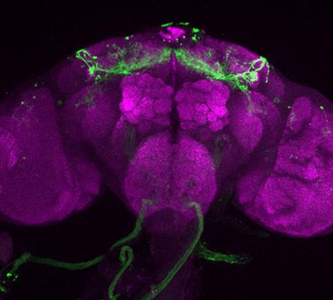
Research Shows Your Genes Affect Your Sleep Clock
Johns Hopkins sleep expert and neurologist Marking Wu, M.D., Ph.D., and beau researchers recently identified a factor involved in the circadian regulation of slumber timing. When researchers removed this gene—called "wide awake"—from fruit flies, the flies experienced problems falling asleep and staying asleep. A similar sleep cistron exists in both humans and mice. Scientists keep to report this cistron in hopes of understanding more nearly how processes within our cells affect our power to sleep.
Your Body's Built-In Sleep Controls
Co-ordinate to Wu, there are ii main processes that regulate sleep:cyclic rhythms andsleep drive.
Circadian rhythms are controlled by a biological clock located in the brain. One fundamental function of this clock is responding to light cues, ramping up production of the hormone melatonin at night, then switching information technology off when it senses light. People with total incomprehension often accept problem sleeping because they are unable to detect and reply to these calorie-free cues.
Slumber drive also plays a primal role: Your body craves slumber, much like it hungers for food. Throughout the day, your desire for sleep builds, and when information technology reaches a certain point, you need to sleep. A major difference between sleep and hunger: Your body tin can't force yous to swallow when you lot're hungry, simply when y'all're tired, it can put y'all to slumber, even if you're in a coming together or behind the bicycle of a car. When you're exhausted, your body is even able to appoint in microsleep episodes of one or 2 seconds while your optics are open up. Napping for more than than 30 minutes subsequently in the mean solar day tin can throw off your night's sleep by decreasing your torso's sleep drive.
Why You Need Slumber
If you accept always felt foggy after a poor night's sleep, information technology won't surprise you that sleep significantly impacts encephalon function. Beginning, a healthy corporeality of sleep is vital for "brain plasticity," or the brain's power to adapt to input. If we sleep besides little, we become unable to procedure what nosotros've learned during the dayand we have more than trouble remembering it in the hereafter. Researchers also believe that sleep may promote the removal of waste matter products from brain cells—something that seems to occur less efficiently when the encephalon is awake.
Slumber is vital to the residual of the body too. When people don't get enough sleep, their health risks ascent. Symptoms of depression, seizures, high blood force per unit area and migraines worsen. Immunity is compromised, increasing the likelihood of illness and infection. Sleep also plays a function in metabolism: Fifty-fifty ane night of missed sleep tin create a prediabetic state in an otherwise good for you person. "There are many important connections between health and sleep," says Wu.
Source: https://www.hopkinsmedicine.org/health/wellness-and-prevention/the-science-of-sleep-understanding-what-happens-when-you-sleep
0 Response to "what happens to your body when you sleep?"
Post a Comment